One of the most common specification questions food manufacturers face when sourcing almonds is whether to use whole natural (skin-on) almonds or blanched (skin-off) almonds. While the difference appears cosmetic at first glance, the two formats have distinct processing characteristics, flavour profiles, shelf-life performance, and end-application suitability. Understanding the technical differences between these grades will help procurement teams make better sourcing decisions, reduce wastage, and optimise product formulations.
What Are Whole Natural Almonds?
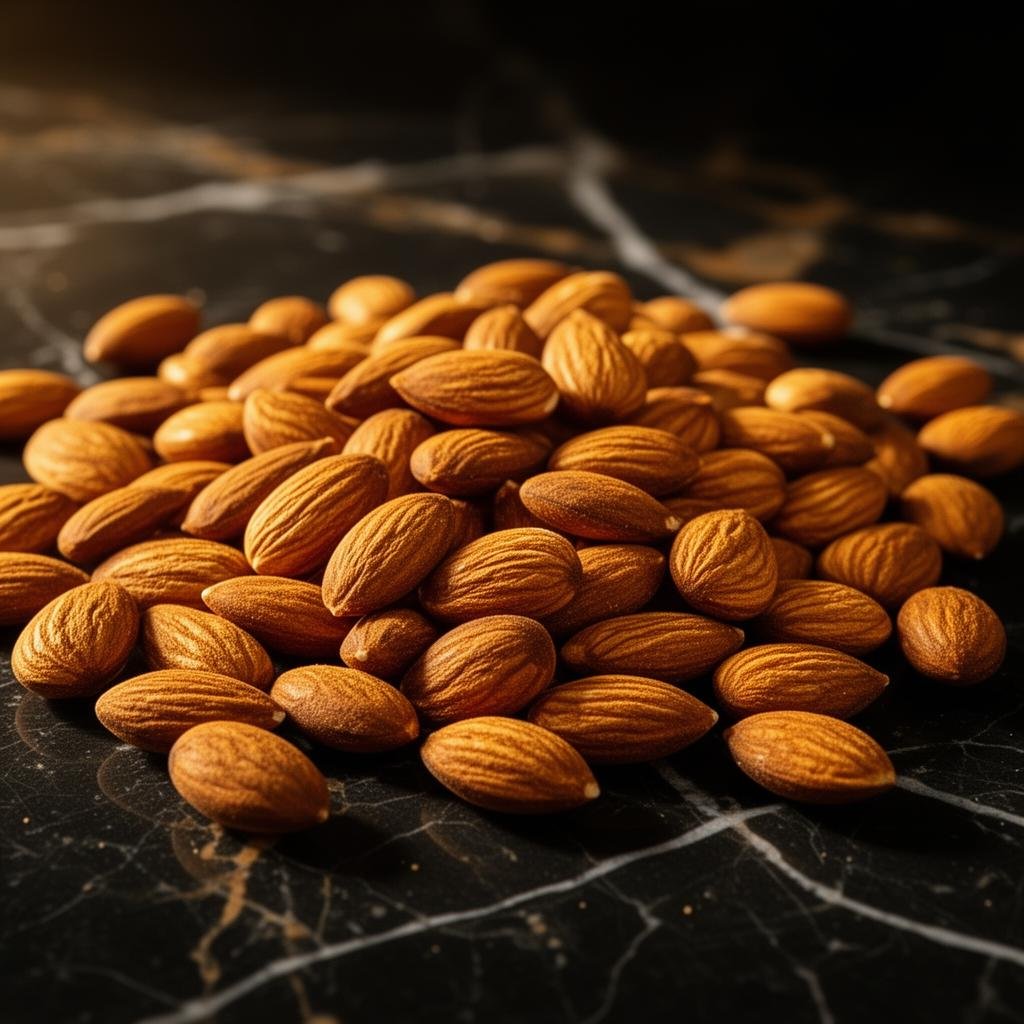
Whole natural almonds retain their brown outer testa (skin). This layer is rich in polyphenols and tannins — antioxidant compounds that give the skin its slightly bitter, astringent character. Nutritionally, the skin adds fibre content and contributes to the overall antioxidant value of the almond. From a processing perspective, whole natural almonds are the starting point for all other almond products — they require no additional processing step before packaging or use, which reduces handling costs and preserves the integrity of the kernel.
For applications where the nut’s natural appearance is part of the product experience — premium snack packs, trail mix, whole nut gifting, and roasted nut retail — whole natural almonds are the natural specification. Their brown skin provides visual depth that consumers associate with naturalness and health. In dry-roasting applications, the skin also acts as a protective barrier, slowing excessive moisture loss and helping the kernel maintain its crunch through the roasting cycle.
Ready to Source Almonds for Your Production Line?
Cambay Industries supplies whole natural and blanched almonds in all standard grades with COA, Halal, and Kosher documentation.
What Are Blanched Almonds?
Blanching is a process of briefly immersing whole almonds in steam or hot water (typically 80–100°C for 30–90 seconds), after which the softened skin is mechanically removed. The result is a smooth, cream-white kernel with a clean, mild flavour and a uniform appearance that makes it ideal for applications where the brown skin would be visually or texturally unwelcome. Blanching also removes most of the polyphenolic compounds in the skin, which reduces bitterness and produces a sweeter, cleaner-flavoured kernel — a significant advantage in confectionery, pastry, and nut milk applications.
Quality blanched almonds should be free from skin fragments, show no browning or oxidation on the surface, have a consistent cream-white colour without yellowing, and maintain a fresh, sweet almond flavour without off-notes. Suppliers who over-process blanched almonds (excessive heat, delayed cooling, or humid storage after blanching) produce inferior product with short shelf life and poor marzipan-making performance. Specifying a maximum moisture content of 5% and a peroxide value below 1.0 meq/kg on receiving inspection will protect against poorly processed stock.
Application Guide: Choosing the Right Format
The decision between whole natural and blanched almonds should be driven by the end application. For premium retail snacking, trail mix, chocolate enrobing (whole dipped chocolates), and baked goods where the nut is visible — whole natural almonds in Supreme or No.1 grade deliver the best visual and flavour result. For applications where the almond is processed into a sub-ingredient — marzipan, frangipane, praline paste, almond milk, and almond flour — blanched whole almonds are the correct specification, as the skin would create texture irregularities and discolouration in the finished product.
Almond slices and slivered almonds are almost always produced from blanched almonds, as the even cream surface gives a premium visual result in bakery topping, bircher muesli, and rice dish garnish. There is a niche market for natural skin-on sliced almonds in specific health food applications, but the default expectation for slices and slivers in commercial food production is blanched.
Shelf Life Differences Between Whole and Blanched
Whole natural almonds have a comparative shelf life advantage over blanched in ambient conditions. The testa (skin) acts as a physical and chemical barrier, slowing the oxidation of the kernel’s oil content and inhibiting moisture uptake. Well-packaged whole natural almonds in vacuum-sealed or nitrogen-flushed cartons can achieve 18-24 month shelf life at ambient temperature below 18°C. Blanched almonds, with their exposed oil-rich surface, are slightly more susceptible to oxidative rancidity and should be stored at lower temperatures (below 12°C ideally) or processed promptly after receipt. Blanched almonds in vacuum packaging typically achieve 12-18 months shelf life — sufficient for most food manufacturing procurement cycles.
Sourcing Both Formats from Cambay Industries
Cambay Industries maintains ready stock of both whole natural and blanched almonds across Supreme and No.1 grades from California (Nonpareil, Carmel) and Spanish Marcona origins. Both formats are available with full COA documentation including aflatoxin B1/B2/G1/G2 panel to EU Regulation 1881/2006 limits, moisture content, free fatty acid value, and sensory assessment. Halal (HFSAA) and Kosher (OU) certificates are available for both formats on request. Minimum order quantities start at one FCL (typically 17–21 MT net depending on pack format). Custom packaging from 25kg bulk sacks to 250g retail pouches with private label is available.
For food manufacturers requiring a consistent, dual-format almond supply from a single audited source, Cambay Industries provides the quality management infrastructure, documentation depth, and supply reliability to support large-scale production programmes across Europe, the GCC, and South and Southeast Asia. Contact our nuts procurement team to discuss grade specifications, sample requests, and annual volume pricing programmes.
Get Almond Samples Within 48 Hours
Request whole natural and blanched samples with a full COA for your QC evaluation. Also explore our Almond Oil and full nuts range.
Published by Cambay Industries — specialists in premium textiles and nuts processing since 1970.