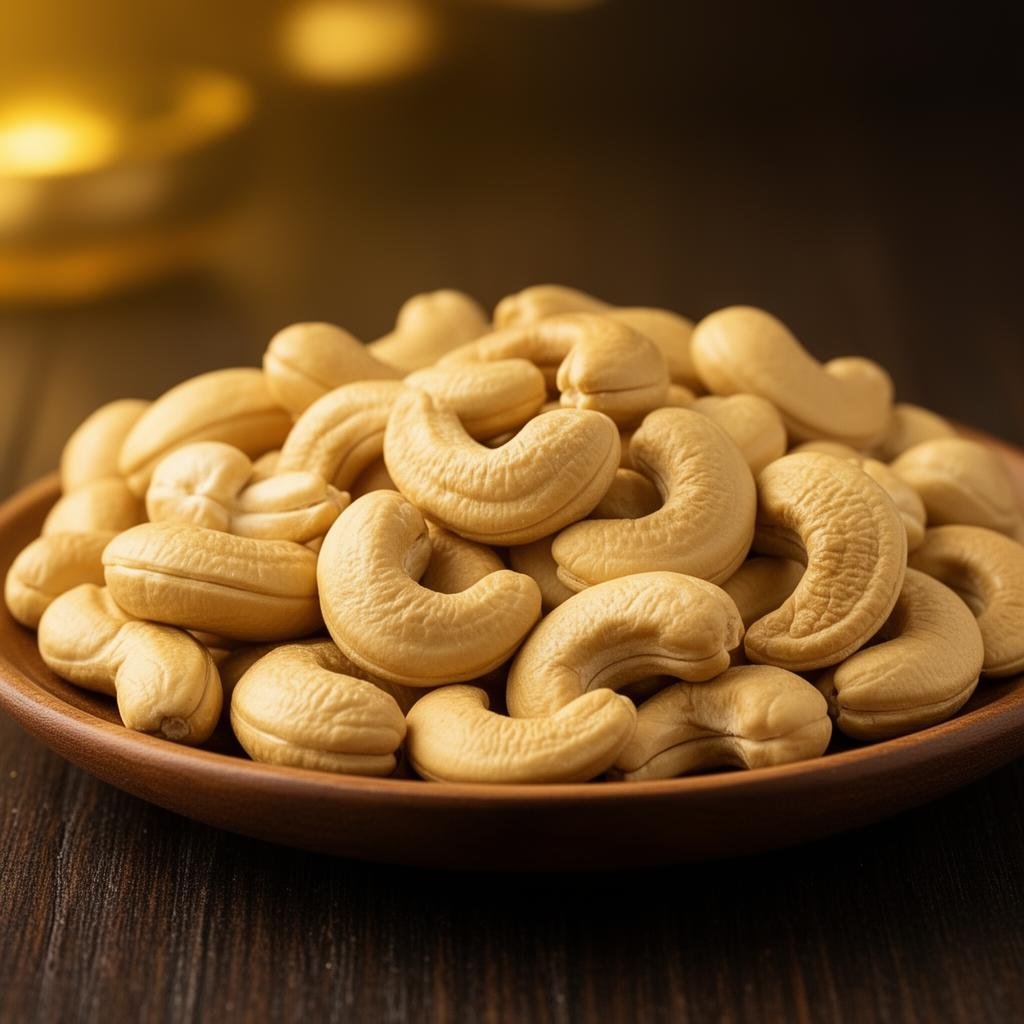
Cashew kernels are traded globally by grade — a standardised classification system that determines size, colour, and quality, and therefore price. Understanding cashew grades is essential for any procurement manager, FMCG brand, or food manufacturer seeking to optimise their ingredient cost-quality balance. This guide explains the most important grades and their ideal applications.
How Cashew Grades Work
The CCCI (Cashew Export Promotion Council of India) grading system classifies cashew kernels by the number of kernels per pound of product. A lower number indicates a larger, more premium kernel. Grade W180 contains 180 kernels per pound — these are the large “Jumbo” kernels used in premium gifting, luxury confectionery, and five-star hotel snacking bowls. Grade W320 contains 320 kernels per pound — this is the global commercial benchmark, widely used across retail snacking brands, FMCG manufacturers, and food service suppliers.
Colour Grading
Beyond size, cashews are also graded by colour. “White Wholes” (WW) are the premium colour grade — creamy white with minimal spotting. “Light Wholes” (LW) are acceptable for most retail and manufacturing applications. Scorched pieces and black/brown spotting are defects that must not exceed defined thresholds for each grade.
Cambay Industries Cashew Supply
We supply W180, W210, W240, W320, and W450 whole grades sourced from West Africa (Côte d’Ivoire, Ghana) and Vietnam. All consignments include CCCI grading certificates, aflatoxin test reports, and full phytosanitary documentation for EU, UK, and GCC import markets.
Published by Cambay Industries — specialists in premium textiles and nuts processing since 1970.